Our Projects
PROJECT OVERVIEW

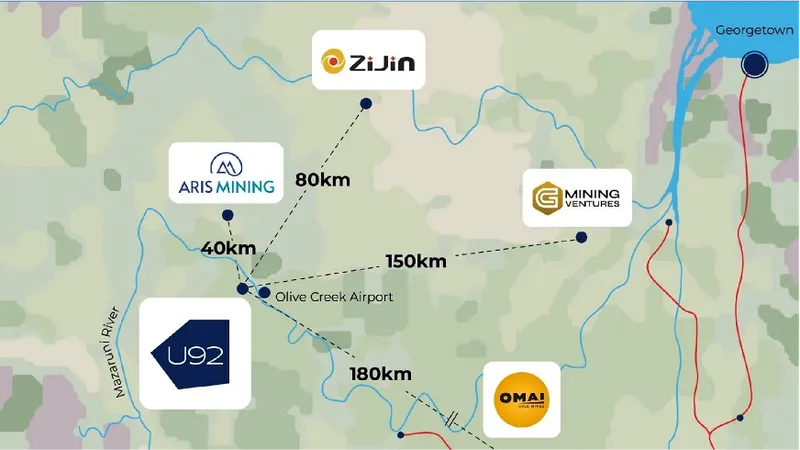
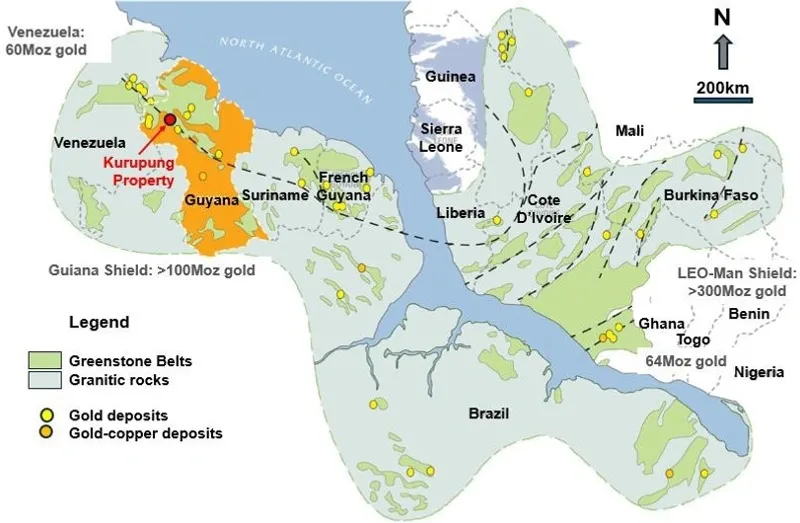
The Kurupung Project is an advanced exploration uranium asset located in the Cuyuni-Mazaruni Region of Guyana. Jurisdiction: Guyana is rapidly emerging as a strategic mining jurisdiction, with a natural resources sector that supports regional employment and export earnings. Land Package: The project consists of two prospecting licenses covering a 92.2km² land package with significant historical exploration work. Infrastructure: The project is accessible year-round and benefits from a history of well-established regional exploration activity, including four operating assets within 180km of the site.
GEOLOGY & MINERALIZATION
The project is characterized by shear-hosted uranium mineralization within the Aricheng Batholith, a regional-scale magmatic body.
Geological Setting: Exploration targets are associated with structures mineralized by late-stage magmatic and/or metasomatic uranium-bearing fluids.
Target Identification: Uranium mineralization is hosted within demagnetized shear zones identifiable as magnetic-low features within airborne magnetics, providing a reliable exploration tool.
HISTORICAL RESOURCE
The Kurupung Project hosts a substantial historical mineral resource estimate, which forms the basis for our planned exploration and resource verification programs.
Total Historical Resource (at 0.03% U₃O₈ cut-off):
Inferred: 6,834,000 tonnes at an average grade of 0.07% U₃O₈, for 9,926,000 contained pounds.
Indicated: 6,869,000 tonnes at an average grade of 0.07% U₃O₈, for 10,812,000 contained pounds.
EXPLORATION POTENTIAL
Open Mineralization: The deposits that comprise the historical resource remain open along strike and down dip. Untested Targets: There are eight additional drilled targets mineralized from surface that were not included in the historical resource estimate. This includes over 14,000 meters of high-grade intersections drilled to a maximum depth of only 150 to 200 meters below surface. Corridors of Potential: Airborne magnetic data shows untested magnetic low corridors, with gaps of 5km along each trend that represent prime exploration ground that has not yet been drilled. Upside from Re-evaluation: The original historic resource was calculated using a uranium price of US$55/lb, providing potential upside given current market pricing.
Pro-Mining Jurisdiction
Open Mineralization: The deposits that comprise the historical resource remain open along strike and down dip. Untested Targets: There are eight additional drilled targets mineralized from surface that were not included in the historical resource estimate. This includes over 14,000 meters of high-grade intersections drilled to a maximum depth of only 150 to 200 meters below surface. Corridors of Potential: Airborne magnetic data shows untested magnetic low corridors, with gaps of 5km along each trend that represent prime exploration ground that has not yet been drilled. Upside from Re-evaluation: The original historic resource was calculated using a uranium price of US$55/lb, providing potential upside given current market pricing.